My brother stopped talking about his anniversary dinner and went back to breakfast.
“Stay on the phone,” he said. “I’m going through Mom’s messages.”
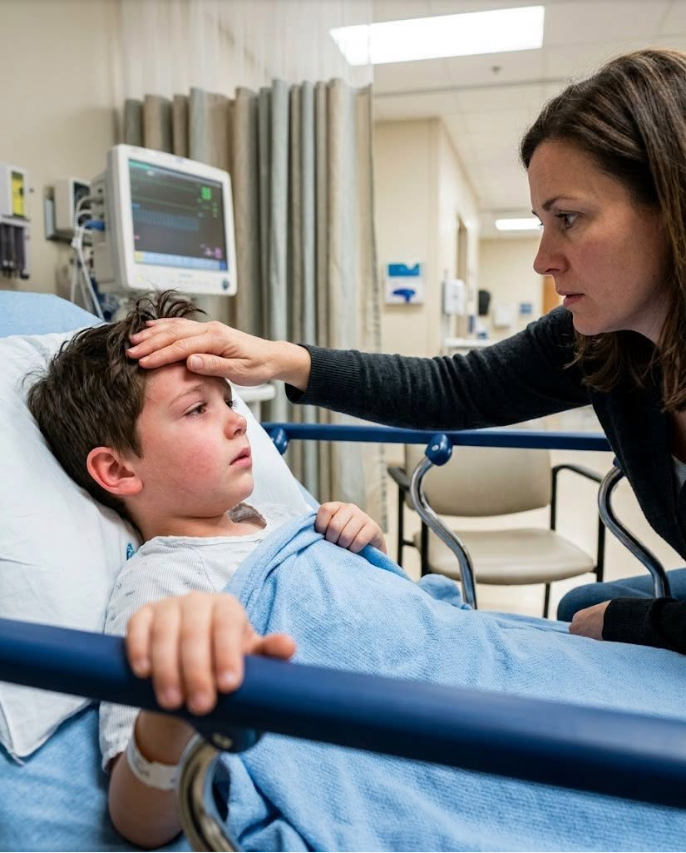
I opened the notes app while my son lay beneath the thin hospital blanket beside me. The room was cold, and every time he shifted, the blanket made that dry crackling sound I was beginning to hate.
He had managed half a cup of ice and two crackers.
“I found the first one,” my brother said.
The message was timestamped 11:17 that morning.
Mom had told him my son woke with a fever but was already improving.
She claimed she had spoken to me.
According to her message, I had agreed everyone should keep the day normal rather than turning his fever into “a whole production.”
I checked the timestamp and saved it.
After lunch, Mom had written that my son was asking for me, but giving in every time he complained would only teach him to control adults.
My brother’s response beneath it was a thumbs-up.
He stopped talking when he reached it.
Finally he said, “I thought she meant he was bored and asking for you.”
But the thumbs-up still existed.
Then he found Dad’s message from 3:52.
If the fever didn’t settle, they might take my son somewhere to be checked. But nobody should call me yet because I would “drop everything” and disrupt the anniversary plans.
“Did you know they were considering taking him in?” I asked.
“Did you know they hadn’t contacted me?”
“Did you know he’d been asking for me?”
Then I heard his chair scrape backward.
That was the first real change.
Until then, my parents controlled two versions of the day.
There was the day my son had actually lived.
And there was the version everyone else had been given.
My brother walking out of that restaurant put one person inside both.
A nurse named Dana returned to check the monitor.
While she worked, I asked when my son had been registered.
“What were you told when he arrived?”
“His grandmother said his mother was on her way.”
I asked her to document when I arrived and what I had told her.
I didn’t demand to know what would happen next.
This time her voice was softer.
“I think everybody is getting unnecessarily worked up.”
“What did you tell the hospital?”
“He was safe. We didn’t abandon him on the street. He was in a hospital.”
“Did anyone there tell you that you could leave him without an adult?”
“No one here would tell a guardian to leave a child alone.”
Then came her favorite explanation.
“I don’t want him becoming terrified every time his body feels different,” she said. “You reinforce his anxiety. Somebody has to teach him resilience.”
I lowered the volume so my son couldn’t hear.
“You told the hospital I was coming before you even told me he was there.”
A few minutes later, Dad texted.
He claimed he’d never agreed with leaving my son alone.
For thirty seconds, I wanted to believe him.
Then my brother called from his car.
Dad had sent it before they reached the hospital.
If my son was still “complaining” by late afternoon, Dad wrote, they should have him checked, make sure someone knew where he was, then continue to dinner because cancelling would “reward the behavior.”
My brother arrived soon afterward, still wearing the clothes he’d chosen for his anniversary dinner.
My brother’s expression collapsed.
That mattered more than an elaborate apology.
When my son settled, my brother showed me the complete message thread.
There was no single shocking confession.
From breakfast onward, every decision followed the same rule.
Don’t interrupt dinner plans yet.
Don’t give the child what he’s asking for yet.
At 12:46, Mom claimed I had already been informed.
At 3:52, Dad explicitly said I shouldn’t be informed yet.
Both statements couldn’t be true.
By the time they registered my son at 4:18, the deception had already existed for hours.
Mom started calling my brother.
On the third call, he answered.
“Please don’t let your sister turn this into some permanent family rupture,” she said loudly enough that I could hear.
“What did you tell me before dinner?”
“That she had everything handled.”
“No. You told me she’d already picked him up.”
“Well, that was what was supposed to happen.”
“No, Mom. I’m focusing on where he was.”
Then she reminded him it was his anniversary.
The reservation had taken weeks.
Everyone had tried so hard to make the evening special.
Everything revolved around the adults.
My brother looked toward the bed.
Later, a hospital staff member asked me to step into the hallway.
She asked who normally cared for my son.
Whether he would return to my parents’ home after discharge.
Whether they would have access to him without me present.
I answered questions and let the truth exist on the record.
When I returned, my brother was trying to untangle a charging cable from the bed rail.
I watched for several seconds, then took the cord.
“That was my plan,” my brother protested.
By evening, the doctor said discharge looked likely once they finished observing him.
Then I sent one message to both parents.
My son would never stay with them alone again.
They were not to collect him, transport him, or make medical decisions for him unless I was present or had explicitly arranged it.
Any discussion about what happened would be with me.
You’re punishing us for one stressful afternoon.
Cutting grandparents out over one disagreement is unhealthy.
A boundary doesn’t require the other person to agree before it becomes real.
My brother went downstairs for food.
He returned with apple juice for my son, a turkey sandwich for me, crackers and two chocolate bars nobody had requested.
“You hate pretzels,” my son told me.
For a moment, everything felt almost quiet.
Then I saw my mother walking through the emergency-room entrance.
She still wore her dinner clothes.
Her coat was folded over one arm.
She scanned the room until she found us.
“This has gotten completely out of proportion,” she said.
“I need to explain to him that nobody abandoned him.”
“He shouldn’t go home believing his grandparents don’t love him.”
“You’re not having that conversation with him tonight.”
“I am trying to protect our relationship with him.”
For years, that look had worked.
He returned to my son’s bedside.
That was the moment she lost control of the story.
She could still call me dramatic.
But she could no longer give each person a different version and trust that none of us would compare notes.
“You’ll regret making this permanent.”
Just a woman walking away because, for once, nobody in the room was willing to rearrange reality to make her comfortable.
Eventually, the discharge paperwork came.
I listened to every instruction again.
Threw away the half-empty water bottle.
Checked the room twice because exhaustion convinced me I’d forgotten something.
My son sat on the bed while I found his shoes.
“Are you mad I ruined your anniversary?”
My brother stopped tying his shoe.
“But everybody was supposed to have dinner.”
My brother picked up the second shoe.
“Because when somebody you love needs you, you show up.”
Nobody lectured him about resilience.
Nobody told him fear would make him stronger.
Nobody asked an exhausted child to understand why dinner had once mattered more than his fever.
My son noticed the hospital blanket slipping toward the floor.
Before I could reach it, my brother bent down.
Spread it carefully across my son’s legs.
Then tucked the edge beneath his feet.
But I remembered how that same blanket had looked when I first arrived—clutched between my son’s fingers while he stared toward the entrance, waiting for the grandparents who had promised they would return after dinner.
Now my brother tucked it securely around him and stayed beside the chair.
My parents had spent the entire day trying to teach my son a lesson.
They wanted him to learn not to ask.
Instead, he learned something else.
He learned that being sick did not make him a nuisance.
That asking for his mother was not manipulation.
That fear was not a punishment adults were entitled to use.
And that when someone tells you they’ll come back after dinner, you eventually learn to notice the person who skipped dinner and stayed.



0 commentaires:
Enregistrer un commentaire